

Level is not consumption
A level sensor measures a property related to the amount of fuel in the tank. Converting that reading into litres requires a tank-specific relationship. Consumption is fuel used over an interval; a platform may derive it from level changes, vehicle data or a model. These methods have different uncertainty. A percentage shown on a dashboard is not automatically an accurate volume measurement.
What a dedicated level sensor provides
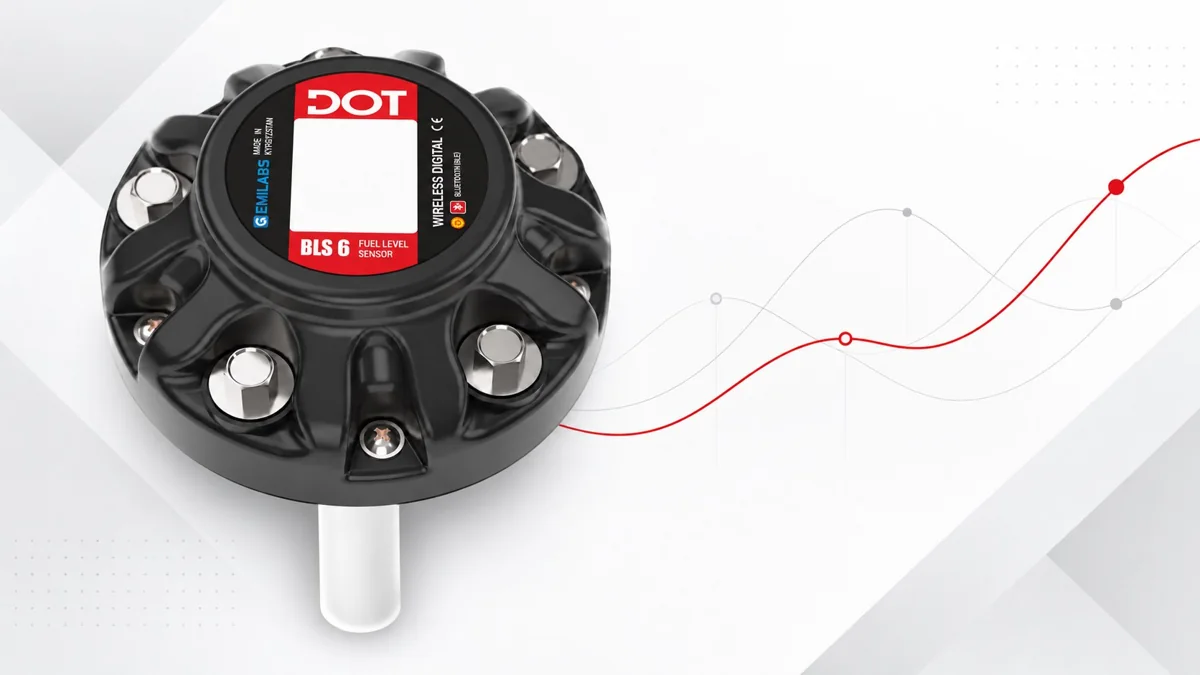
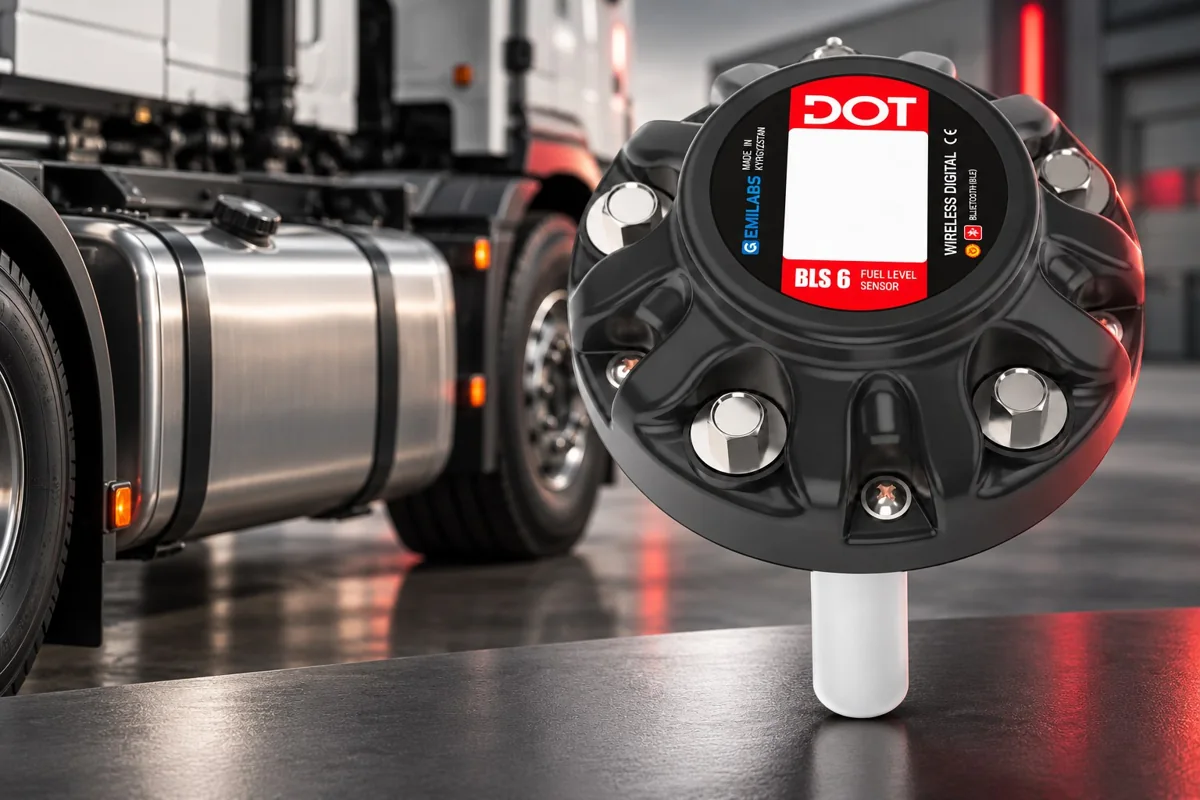
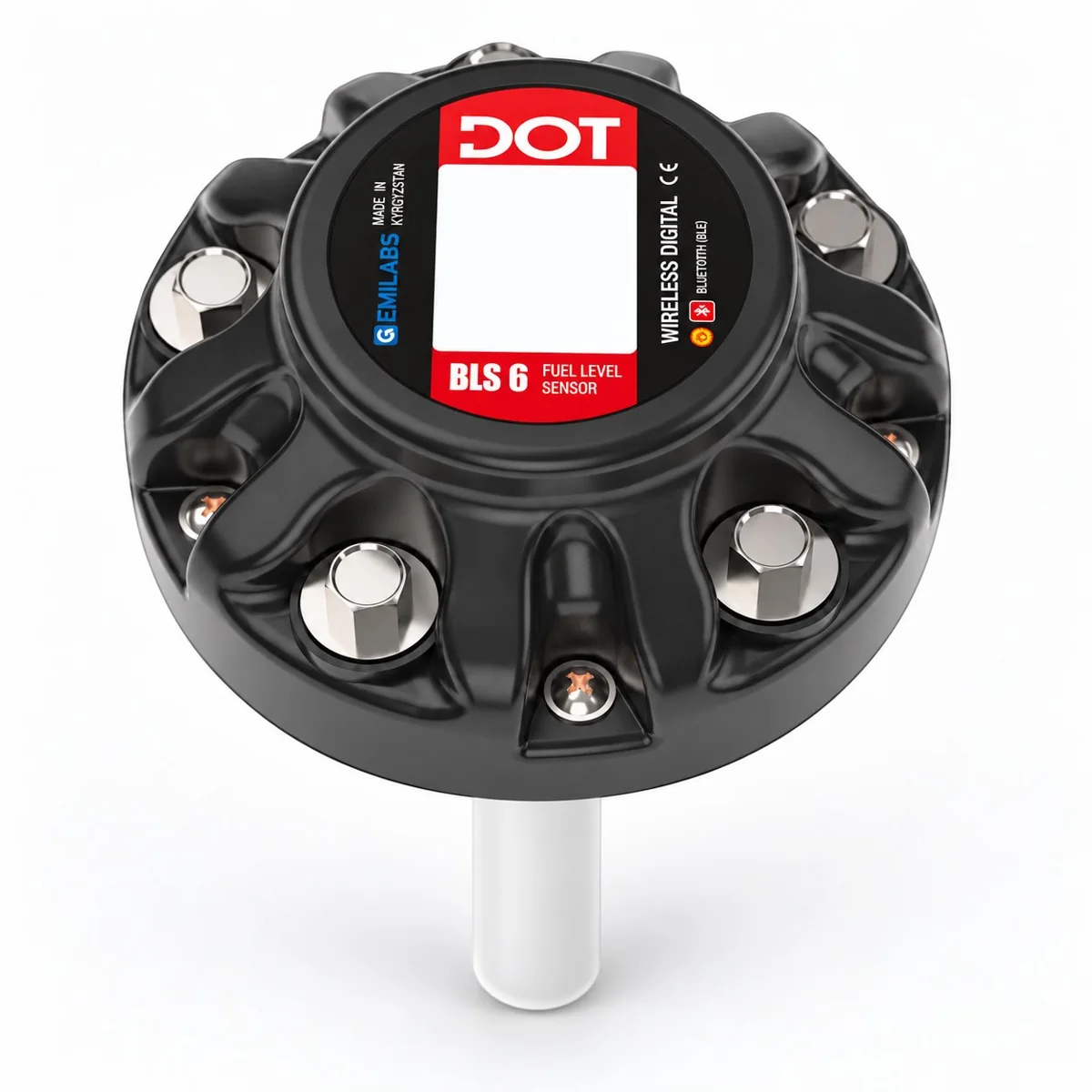
A capacitive sensor responds to the change in electrical capacitance as the immersed length changes. Its usable range, installation and fuel compatibility matter. The DOT BLS v.6 manual describes a capacitive sensor for petrol and diesel with BLE data transmission. It explicitly excludes water and other electrically conductive liquids. Its stated sensor error must not be presented as the guaranteed error of the entire installed monitoring system.
What CAN can and cannot tell you
CAN is a communication bus, not a fuel-measuring instrument. Available values depend on the vehicle, control units, adapter, supported parameters and decoding. Some projects can use reported tank level or cumulative consumption; others do not expose the required value. Obtain a vehicle-specific compatibility check and compare decoded values with reference observations. This article does not establish CAN support for any particular DOT tracker.
When an estimate is useful
Distance multiplied by a reference consumption rate can support budgeting, but it does not directly measure fuel remaining or identify a drain. Load, traffic, route and idling change consumption. For example, 300 km at an assumed 25 L/100 km gives an estimated 75 L. This is an illustrative calculation, not a sensor reading or a measured customer result. Label such reports as estimates.
Calibration links level to volume
A tank may be irregularly shaped: equal increases in height need not represent equal quantities of fuel. A calibration table records known volumes and corresponding readings using the procedure for the actual sensor and tank. Sensor setup and tank-volume calibration are distinct steps. Keep the table version, tank identification and procedure record. Installation involving the tank must be performed by competent personnel under the applicable safety procedure; a general article is not a drilling instruction.
Why false events appear
Slopes, vehicle motion, fuel slosh, temperature effects, sampling and communication gaps can distort a graph. A sudden negative step is a reason to investigate, not proof of theft. Compare events with location, stopped/moving state, refuelling records and subsequent stable readings. Filtering can reduce noise but also delay detection or conceal short events. Test thresholds using known events before enabling operational alerts.
A simple reconciliation example
Suppose the calibrated level starts at 120 L, a documented refuelling adds 80 L and the closing level is 150 L. The balance is 120 + 80 − 150 = 50 L. This example assumes no transfers or unrecorded additions and reliable comparable readings. It does not prove that the engine consumed exactly 50 L; leaks, drains and measurement uncertainty can also affect the balance. A flow-based or ECU consumption value answers a different measurement question.
Choose and verify the complete system
For refuelling and tank-level events, investigate a dedicated sensor and calibration. For engine metrics, investigate available vehicle data. For budgeting, a clearly labelled estimate may suffice. Check sensor protocol, receiving tracker, units and platform processing together. Explore DOT BLS v.6 documentation and discuss fuel reporting in Locavist with EDVADO. Send the tank configuration, fuel type, vehicle list and intended reports with your quotation request; do not assume compatibility from the word BLE alone.
 DOT BLS v.6 ↗