


Start with the business question
A delivery fleet may need reliable trip history, while a refrigerated carrier also needs temperature measurements. A fuel-control project requires a suitable measurement source. Write down the decision each data point should support: identifying excessive idling, investigating a missing journey or checking a temperature excursion. The tracker collects and transmits data; reports and notifications also depend on the platform and its configuration.
Turn requirements into a shortlist
Separate essential requirements from optional features. For each vehicle group, record supply voltage, available mounting space, operating conditions, required sensors, reporting frequency and countries of operation. Ask the installer whether access to ignition or vehicle data is permitted. An interface name alone does not establish compatibility with a sensor or vehicle.
-
Location and journeys: check GNSS reception, reporting rules and offline storage.
-
External sensors: verify electrical interface, supported protocol, sensor count and firmware.
-
Vehicle data: request an explicit compatibility check for the model, year and required parameters.
-
Integration: confirm that your server can decode the device protocol and the fields you actually need.

Mobile connectivity is a separate choice
GNSS determines position; the mobile network normally carries data to the server. A device can have a valid position but no mobile connection. Check radio bands, operator coverage, SIM roaming and APN requirements in every operating country. Do not assume that a 2G fallback will remain available everywhere. Reporting intervals and connection strategy influence traffic and power consumption; validate them in a pilot rather than promising a universal monthly data allowance.
Read the hardware limits correctly
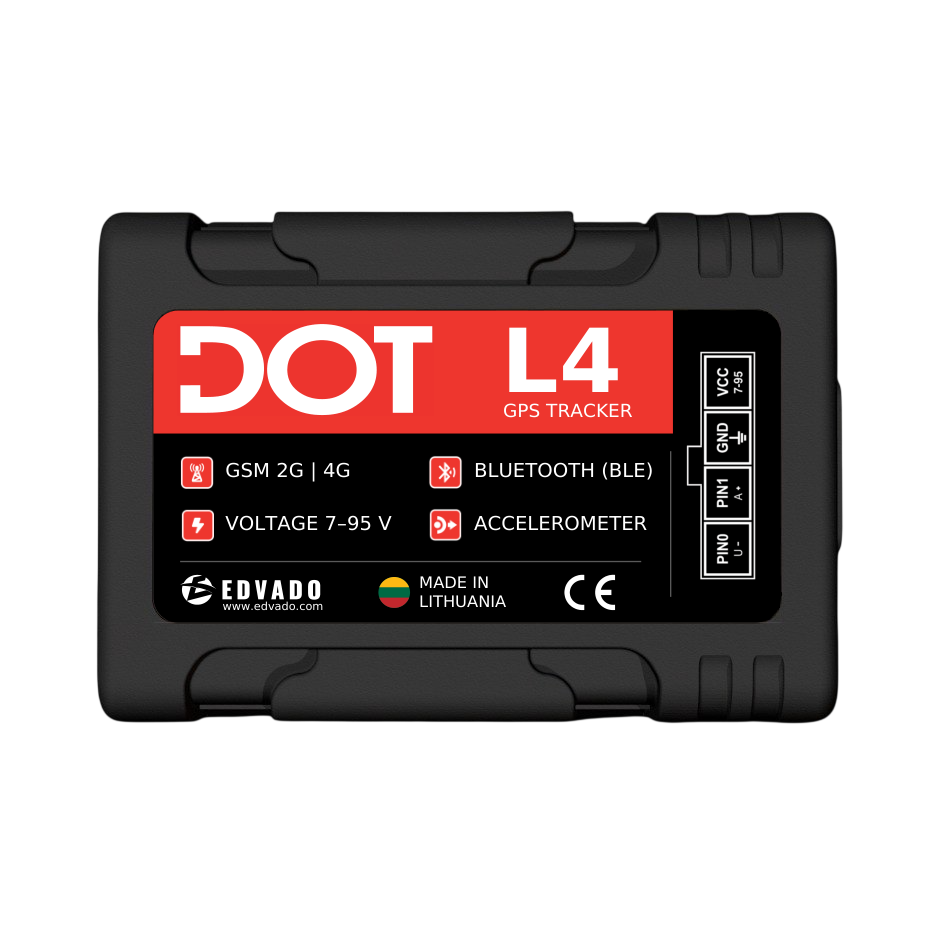
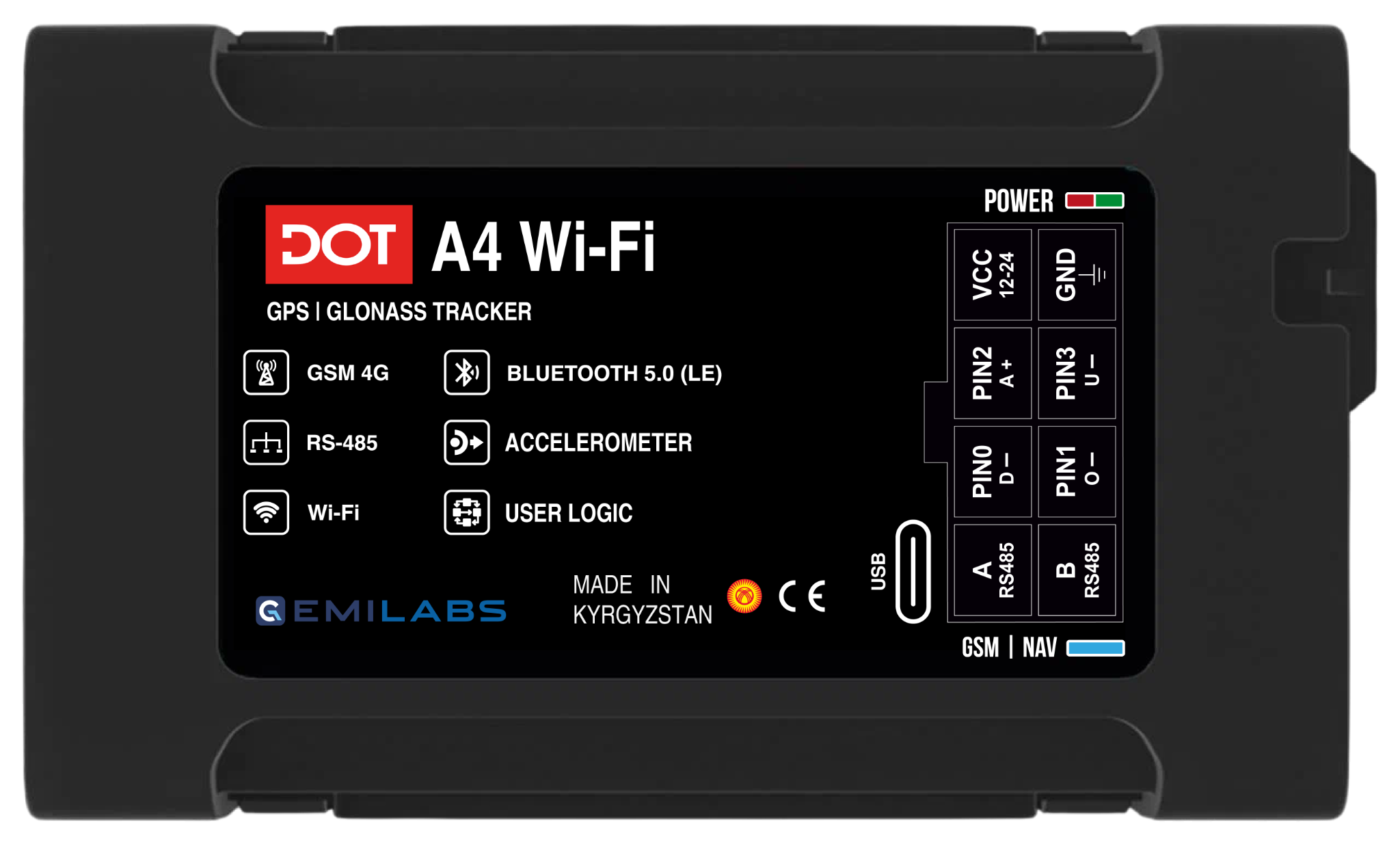
The DOT L4 manual and technical passport specify 2G/4G Cat.1, BLE and a 7–95 V supply range. The DOT A4 Wi-Fi manual documents Wi-Fi, BLE, RS485 and a 9–40 V supply range. These are model-specific examples, not interchangeable wiring instructions. Both documented housings are IP54: that is not a claim that installation in an exposed wet location is suitable. Check the complete manual, connectors and mounting conditions before choosing a location.
Design the whole measurement chain
For a temperature project, ask whether the tracker supports the exact sensor payload, whether the platform interprets its units and whether stale readings are flagged. For fuel control, establish whether data comes from a level sensor, vehicle bus or an estimate. A tracker with BLE does not automatically support every BLE sensor. A platform accepting coordinates does not necessarily decode every additional field. Request a sample data exchange with fictitious identifiers before a larger rollout.
Example: build a pilot acceptance sheet
Consider a delivery fleet with two vehicle types. This is a planning example, not an EDVADO customer case. Test a representative vehicle of each type over normal routes and parking periods. Record whether journeys arrive, how an interrupted connection is recovered, whether ignition events match reality and whether the desired sensors remain visible with doors closed. Agree acceptable gaps and reporting delay before the test. Compare the result with the requirements, not just with a successful login to the map.
Compare total deployment cost
Include installation, SIM service, platform access, sensor calibration, training and ongoing maintenance. A cheaper tracker may not be cheaper to deploy if it requires extra adapters or repeated visits. Conversely, buying functions that are not used adds complexity without solving a business problem. No universal savings percentage applies to every fleet.
What to send with a quotation request
Provide vehicle types and quantities, operating countries, desired measurements, sensor models, target platform and installation constraints. Use DOT L4 and DOT A4 Wi-Fi documentation to discuss a shortlist with EDVADO. Review Locavist for the monitoring layer and DOT Configurator for device management; confirm the intended integration and functions as part of the project.