


Purpose and operating principle
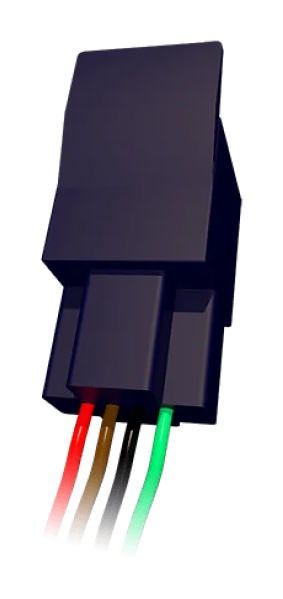
An electromagnetic relay uses a control circuit to move a separate switching contact. In a typical automotive changeover relay (SPDT), one common contact alternates between a normally closed and a normally open path. The description below explains this standard arrangement; it is not a verified specification of the photographed product.
General reference — not the product wiring diagram
The numbers below describe a typical changeover relay. Do not assign these numbers to the photographed wires by colour or position. Five terminals alone do not prove an SPDT arrangement: other five-terminal designs exist.
- 85 / 86 — coil terminals. Energising the coil moves the contact. Polarity depends on the actual construction and any internal suppression diode.
- 30 — common switching contact (COM).
- 87a — normally closed contact (NC): connected to 30 when the coil is not energised.
- 87 — normally open contact (NO): connected to 30 when the coil is energised.
Coil not energised
Coil energised
Typical circuit options
A normally open path is used when a load should be connected only while the coil is energised. A normally closed path is used when the rest state requires continuity. A changeover path selects between two circuits; it does not mean both outputs are closed simultaneously. The coil circuit and load circuit must each be designed for their own electrical requirements.
Typical automotive and telematics applications
Suitable relays are commonly used for auxiliary lighting, fans and other electrical loads. In a designed telematics installation, a tracker control output can command a relay driver, while the relay contacts switch a separately protected load circuit. This is a general architecture, not confirmed compatibility with any EDVADO tracker or this relay.
Installation and safety
Before connecting anything, obtain the manufacturer’s terminal diagram and ratings. Check coil voltage and current, output-driver capacity, switching duty and load inrush, wiring, fuse protection and suppression. Never connect a load directly to an underspecified tracker output. Do not use a generic example to interrupt safety-critical vehicle circuits or stop a moving vehicle; installation requires a qualified specialist and a vehicle-specific safety assessment.
Manufacturer confirmation required
Exact manufacturer/model; actual pinout and wire colours; contact arrangement; coil voltage/current and polarity; contact voltage/current ratings by load type; internal diode/resistor or other suppression; environmental protection, temperature range, dimensions and mounting; supported trackers and installation instructions.
Sources and technical support
VIOX — general explanation of five-pin relays. Additional reference only, not documentation for this item. Text is independently written and the conceptual diagrams are original.
VIOX ↗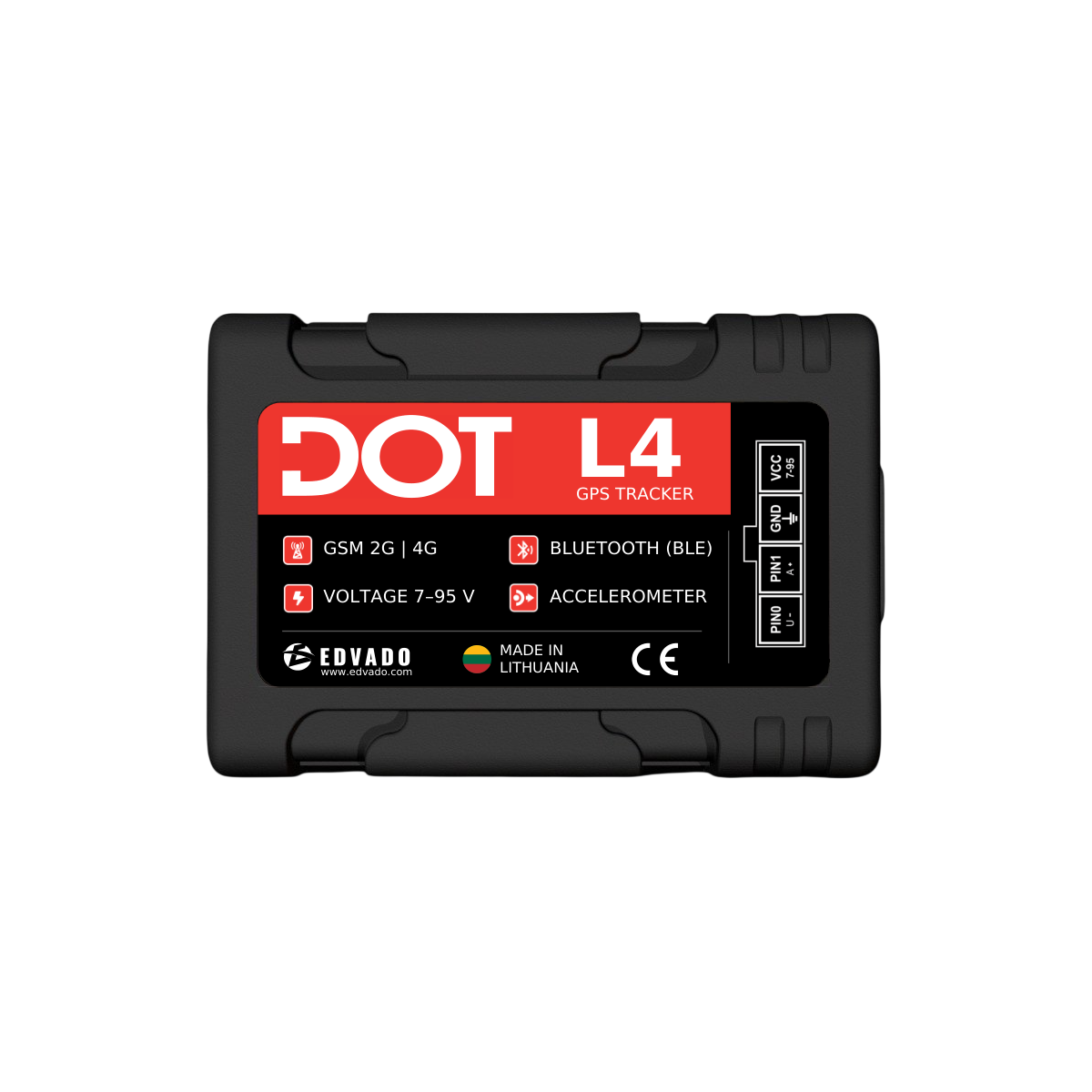
Relay DOT BLE
Support
For installation and product questions, contact our technical support team.
Create a support request →Specification information
Detailed specifications for this model are not yet published. Contact us for the datasheet and wiring diagram before selecting it for your project.
Not specified: absent from sources. Not confirmed: catalog claim without a technical document. Not supported: explicitly excluded by the manufacturer.
Cellular connectivity
- Cellular connectivity
- Not specified
Bluetooth / BLE
- BLE
- Not confirmed — Catalog claim only — technical confirmation missing
CAN interface / external reader
- CAN interface / external reader
- Not specified
Interfaces
- Interfaces
- Not specified
Power and battery
- Power and battery
- Not specified
Inputs / outputs
- Inputs / outputs
- Not specified
Sensors and measurement
- Sensors and measurement
- Not specified
Positioning
- Positioning
- Not specified
Body and environment
- Body and environment
- Not specified
Storage and transmission
- Storage and transmission
- Not specified
Other specifications
- Other specifications
- Not specified
Application restrictions
- Application restrictions
- Not specified